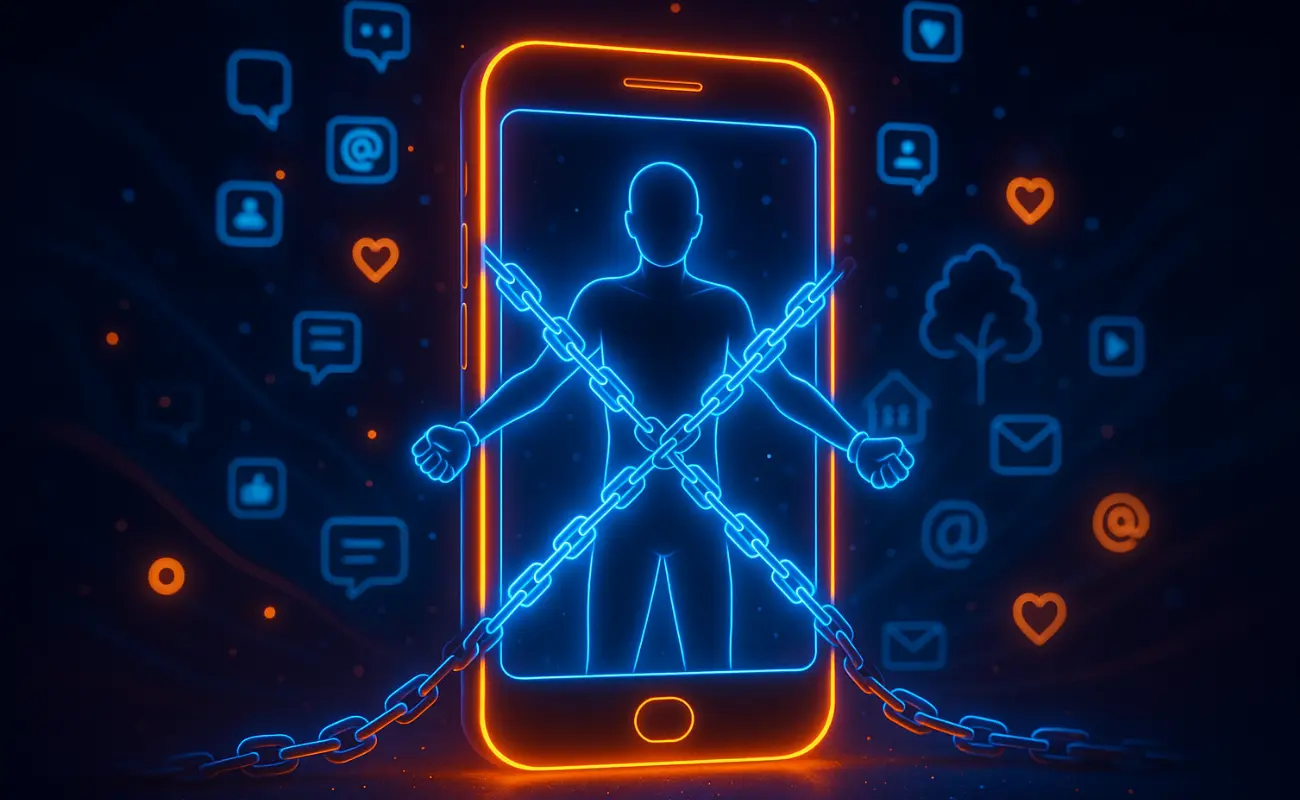
Why screens wear us out (and yes, it’s more than tired eyes) 📱😵💫
We’ve all been there: doomscrolling at midnight, answering one more ping, trying to catch up on a feed that never ends. It’s not only your eyes that suffer — your mind does too. Digital detox starts when you realize how much your screen habits shape your energy, focus, and emotions. Moreover, blue light disrupts sleep hormones, endless notifications shatter focus, and the pressure to perform online keeps your nervous system constantly alert. Eventually, these patterns rewire how you process stimulation and rest. As a result, your brain treats each notification as a micro reward, which changes the way you expect satisfaction and rest.
Eventually, those tiny interactions accumulate. You can feel connected yet strangely disconnected from real people and moments. That hollow, restless sensation is what we call digital overload. It quietly seeps into relationships, work, creativity, and even your sense of identity. However, once you recognize the pattern, you can start to untangle it. Being intentional about your time online isn’t trendy—it’s essential.
Common signs you’re digitally overloaded (red flags to watch for) 🚩
Not sure if you need a break? Here are the key warning signs. If several of them sound familiar, you’re likely entering the overload zone. No judgment here — awareness is the first step. Some effects are physical (headaches, sleep issues), others emotional (irritability, FOMO), and some behavioral (checking your phone constantly, scrolling during conversations).
- 📱 Waking at night to check your phone
- ⏳ Difficulty focusing for more than a few minutes
- 😰 Anxiety when disconnected from apps or messages
- 😠 Losing patience in conversations
- 🚶 Ignoring hobbies, exercise, or outdoor time
These are not badges of honor. Think of them as a smoke alarm — loud, annoying, but worth paying attention to. Ignoring them can escalate problems: sleep worsens, stress spikes, and small irritations turn into big issues. In short, take the signs seriously — you deserve better than living on autopilot behind a glowing screen.
Before / After: What changes with a digital detox 🌳❌📱
Let’s visualize a day before and after a digital detox.
Before: You check your phone at breakfast, reply to emails mid-bite, take a “quick” scroll as a break, and fall asleep to blue light.
After: You keep your phone away for the first hour, focus deeply in the morning, talk more at lunch, and sleep better at night.
It might sound idealized, yet it’s completely achievable. The shift happens through small, consistent choices. As a result, you reclaim hours of real life and rediscover quiet focus. Even reducing screen time by 30–90 minutes a day can feel like a mini-revolution. Suddenly, you have time to read again or just think clearly.
Top benefits of a digital detox (what you actually gain) ✨
People often treat “less screen time” like a goal, but the real magic lies in what replaces it. When you step away from constant digital noise, your brain resets.
- 💤 Better sleep: less blue light means more melatonin.
- 🎯 Improved focus: longer stretches of undistracted work.
- 🗣️ More presence: deeper conversations and attention.
- 💆 Reduced anxiety: fewer alerts and comparisons.
- 🎨 Rediscovered hobbies: reading, walking, cooking, creating.
Moreover, creativity often surges. Without endless feeds, your brain starts generating original thoughts. You notice little wins — finishing a book chapter, savoring a meal, or enjoying quiet moments. Over time, these wins compound into real balance. Research from Harvard T.H. Chan School of Public Health highlights how unplugging and mindful tech use improve mental health and overall wellbeing.
Quick checklist: How to start your digital detox today ✅
If you’re thinking, “Okay, I want this,” great — start small. The following checklist is designed to be doable, not overwhelming. Choose a few actions and build gradually.
- 📵 Set a phone-free morning window (30–90 minutes)
- 🔕 Turn off non-essential notifications
- ⏱️ Use app timers or digital wellbeing tools
- 🌙 Create a bedtime tech curfew (60–90 minutes before sleep)
- 🎲 Try one screen-free hobby this week
Do these consistently for seven days and note the difference. Don’t chase perfection; slip-ups are normal. What matters is getting back on track quickly. In addition, try pairing new habits with old ones: after brushing your teeth, put your phone in a drawer. Simple and effective.
Practical strategies: A 30-day plan you can actually stick to 📅
Here’s a realistic, flexible roadmap. Follow it loosely, and you’ll see improvements in focus, mood, and sleep. It’s not a strict fast — it’s a reset.
Week 1 — Declutter and baseline
- Audit your apps and notifications
- Limit your biggest time-sinks
- Start each morning phone-free
Week 2 — Replace and rewire
- Add a daily screen-free hobby (30 minutes)
- Walk outside once a day
- Cut social app use by 25%
Week 3 — Deepen
- Extend your evening tech curfew to 90 minutes
- Spend half a day offline on the weekend
- Practice focused work blocks (Pomodoro)
Week 4 — Integrate
- Keep what works, drop what doesn’t
- Maintain simple long-term rules (phone-free meals)
- Celebrate small wins — they matter
If work or family demands attention, adapt rather than abandon the plan. Remember, your rules should serve your life, not the other way around.
Troubleshooting & staying on track 🛠️
Expect slip-ups. Maybe a stressful day pulls you back to old habits. That’s okay — progress isn’t linear. To stay consistent, use practical fixes: mute group chats, schedule “do not disturb” hours, or replace boredom scrolling with a short walk.
- Gradually reduce use instead of quitting cold turkey
- Get an accountability partner
- Keep a short journal of wins and setbacks
- Replace apps with real-world actions — call, meet, walk
As a result, you’ll start measuring success not by screen-time stats, but by how you feel — calmer, more rested, more present. If your sleep and focus improve, that’s success already.
Long-term habits & a gentle wrap-up 🌿
You don’t need to quit technology completely to keep the benefits. The goal is balance, not abstinence. Over time, establish a few sustainable rules: phone-free dinners, device-free walks, or a weekly digital Sabbath.
Keep weekly self-checks, refresh your rules every few months, and celebrate regained attention and hobbies. Screens are tools — powerful ones — but you control them. Take a breath, start small, and let the calm return.
Your future self will thank you. 🌱